 Seolytics
People Also Ask: How It Works and How to Get Your Answer In
People Also Ask answers are now almost all AI Overviews. How Google picks the questions, how to use them for content and how to get cited in the answers.
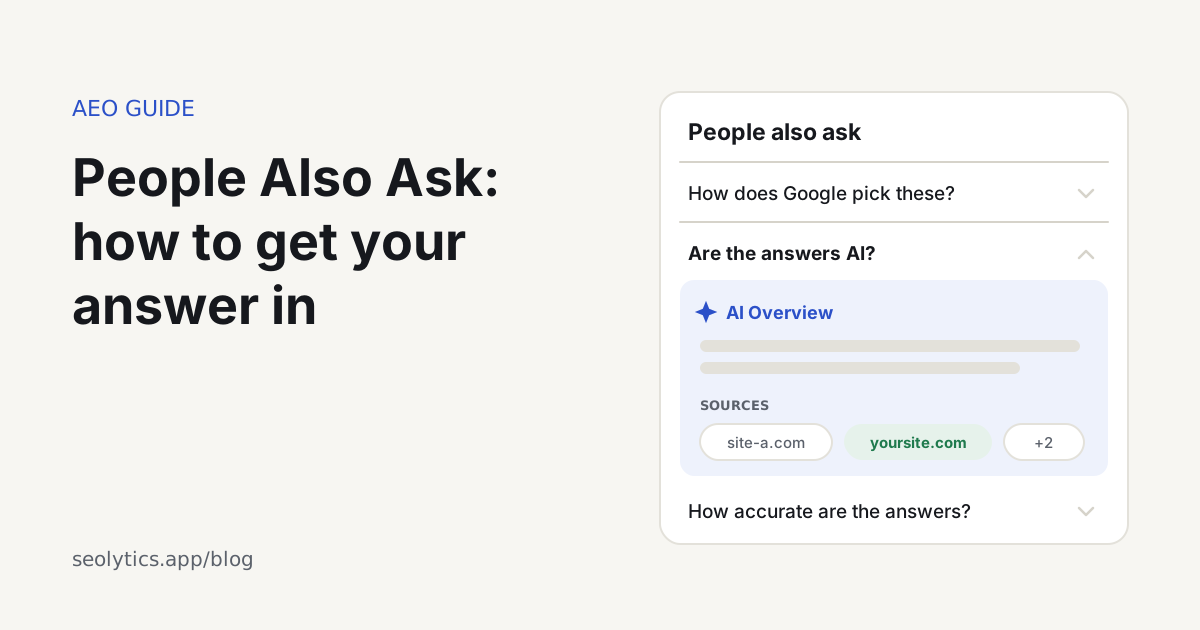
People Also Ask (PAA) is the box in Google results with related questions that expand into a short answer when you click them. In 2026 nearly all of those answers are AI Overviews. In 23 US results pages we collected on October 4, 2026, 132 of 138 People Also Ask answers (96%) were generated by AI rather than quoted from a single page. The questions themselves are still a free list of what people want to know next, and getting into the answers now works the same way as getting cited in any AI Overview.
How does Google determine People Also Ask?
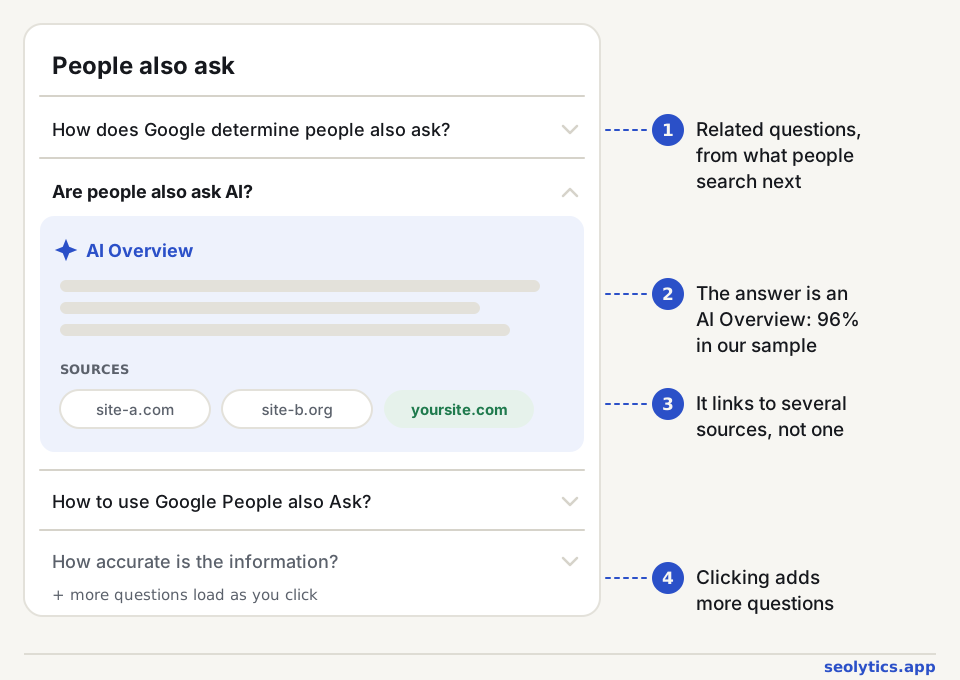
Google shows questions related to the search, based on what other people search for around the same topic. It doesn't publish how it chooses them, but a few things are easy to see:
- The questions follow the topic rather than repeat the query. A search for "people also ask" brings up "How does Google determine people also ask?" and "Are people also ask AI?", which are follow-up questions.
- The box grows as you use it. Opening a question adds two or three more at the bottom, and they drift further from the original search the more you click.
- Country, language and device change the questions, so check them in the market you target.
- The questions change over time as interests shift. Collect them again before you update a page.
Are People Also Ask answers AI?
Mostly. Until 2024 a PAA answer was an extract in the style of a featured snippet: a passage quoted from one page, with a link to that page. Google then began answering some PAA questions with AI Overviews, which are generated summaries linking to several sources. DataForSEO added these AI answers to its SERP API in 2025, and by the autumn of 2026 they had become the normal format.
We analyzed our own sample of 23 Google searches about SEO and AI search. Methodology: google.com, US English, desktop, first-level questions only, collected through the DataForSEO SERP API on October 4, 2026, and counted by the type of answer each question expanded into.
| People Also Ask answer | Answers | Share |
|---|---|---|
| AI Overview | 132 | 96% |
| Classic answer quoted from one page | 6 | 4% |
| Total | 138 | 100% |
All six classic answers came from one results page, for "what is keyword difficulty". It was also the only one of the 23 without an AI Overview at the top. One page proves nothing, but we'll keep an eye on it: when Google doesn't generate an answer for the main search, PAA may still quote pages directly.
How accurate is the "People also ask" information?
About as accurate as any AI Overview. It is usually right on settled facts and less reliable on numbers, recent changes and niche subjects. Google marks the answers as AI-generated and links the sources it used, so if you're going to rely on an answer, open one of the sources first. It is also worth reading the answers for the main questions in your field. Where Google's summary is wrong, a clear and correct page on that point has a good chance of being cited.
How to use Google People Also Ask
PAA gives you a free list of the questions a page should answer. The headings of this article came from it.
- Search for your main keyword in a private window, set to the country you target.
- Open two or three questions to load more, then copy the list.
- Sort the questions by intent. Some belong on the page you're writing, and some need a page of their own.
- Use the best ones as H2 headings, phrased the way people ask, and answer each one in the first sentence or two below it.
- Put the short ones into an FAQ at the end.
Keyword tools can collect the questions for you when you have many topics. In the Seolytics app, opening the results for a keyword shows its People Also Ask questions next to the sources of the AI Overview and the top 10 pages. The free keyword generator finds the question-style searches around a topic, with their search volume.
How to get your page into People Also Ask answers
Since the answers are AI Overviews, one PAA answer now cites several pages. Getting into them takes the same work as getting cited in Google's AI features.
Rank for the question first. Google's AI features draw on its index, and pages near the top of the results for that question are the most likely sources. Under a heading that matches the question, answer it fully in one or two sentences, roughly 40 to 60 words, before going into detail. Steps work best as a list and comparisons as a table, because both are easy to quote. The page also has to be indexed and allowed in snippets, since a noindex or nosnippet takes it out. Specific numbers, sources and first-hand detail give the model a reason to pick your passage.
FAQ structured data won't get you into PAA. In 2023 Google limited FAQ rich results to well-known government and health sites, and PAA never depended on that markup anyway. Write the answers on the page, and add the markup only where it accurately describes the page. GEO vs SEO vs AEO and the GEO guide cover the same habits in more depth.
FAQ
How to get rid of People Also Ask on Google?
Google has no setting to turn the box off. The "Web" filter under the search bar shows plain links without AI Overviews and most other boxes, and some browser extensions hide PAA. If you're doing research, though, the questions are useful to keep.
Are People Also Ask AI?
The questions come from what people search for. The answers are now mostly AI Overviews: 96% in our October 2026 sample, each linking to the pages it used.
How many questions does People Also Ask show?
Usually three or four to begin with. Opening a question adds more, and the box keeps growing as you click.
Does FAQ schema help with People Also Ask?
No. PAA questions and answers come from search behavior and page content, not from FAQ markup, and Google now shows FAQ rich results for only a small set of government and health sites.