 Seolytics
AI SEO: What It Means and What Actually Works
AI SEO means getting cited by ChatGPT, Perplexity and Google's AI answers, and using AI to do SEO faster. What changes, what doesn't, and how to measure it.
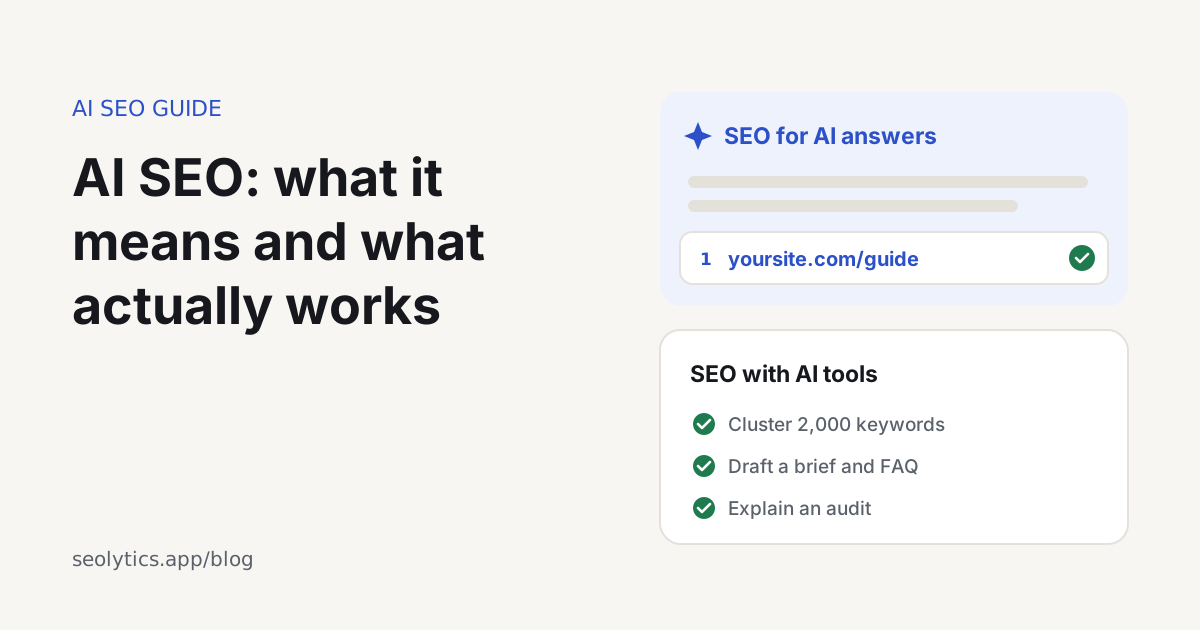
AI SEO means two things: optimizing your site so AI search engines cite it, and using AI tools to do SEO work faster. The first, also called GEO, AEO or LLMO, is about showing up in answers from ChatGPT, Perplexity, Copilot and Google's AI Overviews and AI Mode. The second is about researching, drafting and auditing with AI. Most people searching for "AI SEO" mean the first, so most of this guide is about that.
Google's position is that AI SEO is still SEO. Its guide to generative AI features in Search, published in May 2026, says AI Overviews and AI Mode run on the same ranking and quality systems as the regular results. The difference shows up later, when the model decides which of the pages it found to quote.
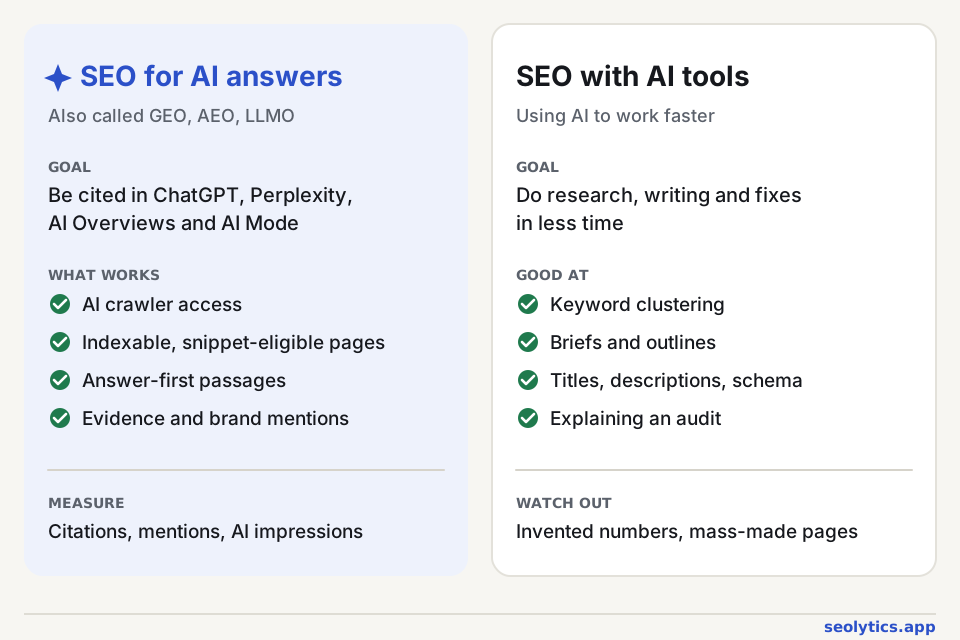
What is AI SEO called now?
There is no settled name yet. You will see the same work described as:
| Name | Stands for | Usually means |
|---|---|---|
| GEO | Generative engine optimization | Being cited in AI-generated answers. The term comes from a 2023 research paper |
| AEO | Answer engine optimization | Being the direct answer: featured snippets, voice replies, AI answers |
| LLMO, LLM SEO | Large language model optimization | Same goal as GEO, named after the models |
| AI search optimization | (none) | The broad marketing term |
| AI SEO | (none) | Any of the above, or SEO done with AI tools |
The differences between GEO, SEO and AEO are covered in our comparison. In this article, "AI SEO" means optimizing for AI answers unless stated otherwise.
How AI search picks the pages it cites
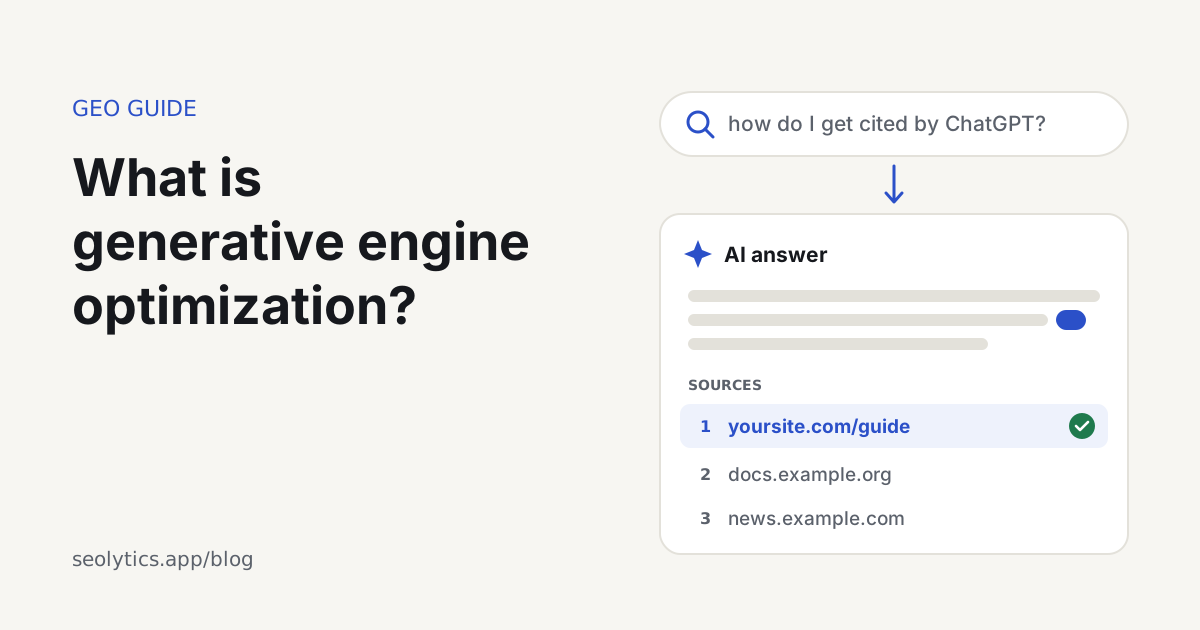
ChatGPT search, Perplexity, Copilot and Google's AI features all retrieve first and write second. The assistant turns a question into several searches, reads the most promising results and writes an answer with citations to the passages it used. Our GEO guide goes through this pipeline in detail.
The retrieval step is ordinary search. Google's AI Overviews and AI Mode use Google's index, Copilot uses Bing's, and ChatGPT search uses its own crawler (OAI-SearchBot) plus search partners. If a page doesn't rank for any of the searches the assistant runs, it almost never gets cited.
The writing step is where pages compete on passages. From the pages it retrieved, the model takes the ones that answer the question clearly and credibly in a few sentences, and that page isn't always the one in first place.
AI SEO vs traditional SEO: what actually changes
| Traditional SEO | AI SEO | |
|---|---|---|
| Where you show up | A ranked list of links | Inside a written answer, as a cited source or a named brand |
| What competes | Pages | Passages, plus your brand's reputation across the web |
| Who reads the page first | Googlebot and Bingbot | The same, plus AI crawlers such as OAI-SearchBot, PerplexityBot and Claude-SearchBot |
| What you measure | Rankings, clicks, traffic | Citations, mentions, share of answers, AI impressions |
| What stays the same | Indexable pages, helpful content, links and authority | Same |
What works for AI SEO
- Let the AI search crawlers in. Allow
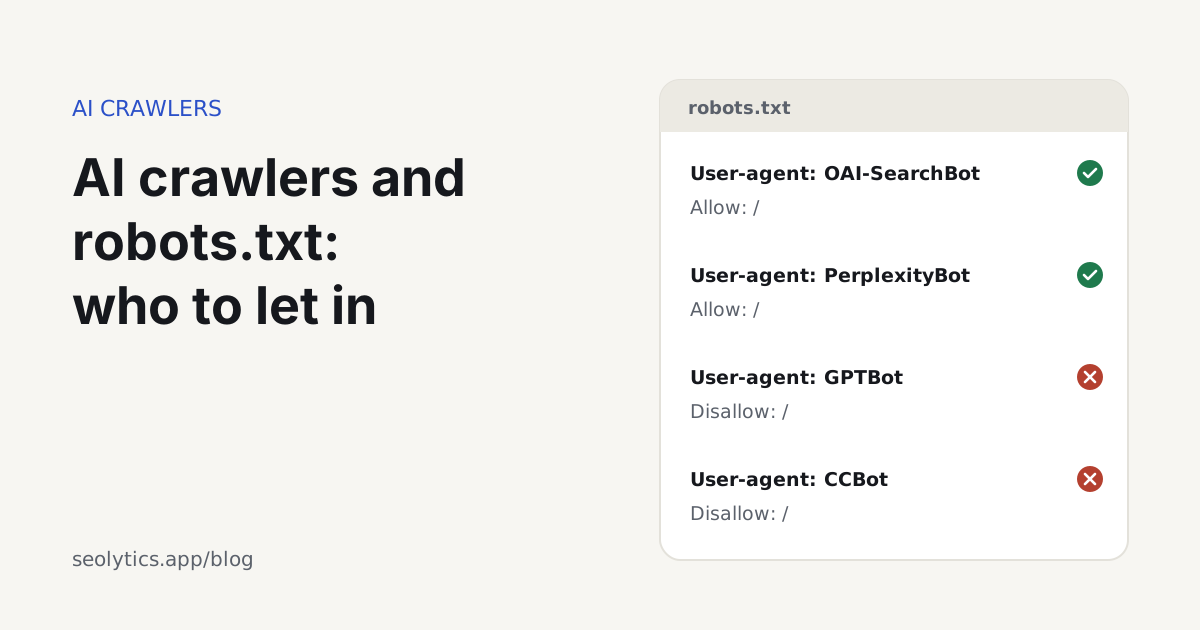
OAI-SearchBot,PerplexityBotandClaude-SearchBotin robots.txt, and make sure your CDN's bot protection isn't blocking them anyway. The rules are in AI crawlers and robots.txt. - Stay indexable and allowed in snippets. Google only uses pages that are indexed and eligible for a snippet, so a
noindexornosnippetremoves a page from AI Overviews and AI Mode. - Put the text in the HTML. Most AI crawlers read what the server sends and don't run JavaScript, so a page that fills itself in with scripts looks empty to them.
- Answer first. Start each section with a sentence or two that answers its heading, and write headings the way people phrase the question.
- Back up claims. Link sources, give specific numbers, describe what you've done yourself. In the original GEO study, adding citations, quotations and statistics raised a page's visibility in AI answers by up to 40% on the authors' benchmark.
- Get mentioned on other sites. Assistants tend to name the brands that reviews, comparison articles, forums and the press talk about. A strong page from a brand nobody mentions usually loses to a decent page from a brand everyone mentions.
- Keep pages up to date, with visible publish and update dates, especially pages about things that change quickly.
Some things you don't need. Google's guide says llms.txt and other AI-only files, special markup, content split into chunks for machines, and text rewritten "for AI" make no difference to its AI features. Our article on llms.txt covers the cases where that file does help.
Can SEO be done by AI?
Some of it. AI tools handle the mechanical side of SEO well:
- grouping thousands of keywords into topics and pages;
- turning research into briefs and outlines;
- drafting titles, meta descriptions and FAQ answers for a person to edit;
- writing schema markup, regular expressions and redirect rules;
- explaining an audit and sorting the fixes by impact.
They are weak at the things that get content cited in the first place: first-hand experience, original data, judgment and accuracy. A chat assistant also has no search data of its own. Ask it for search volumes and you may get plausible numbers that it made up. Google's spam policies call pages mass-produced to manipulate rankings scaled content abuse, and that applies whether a person or a model wrote them.
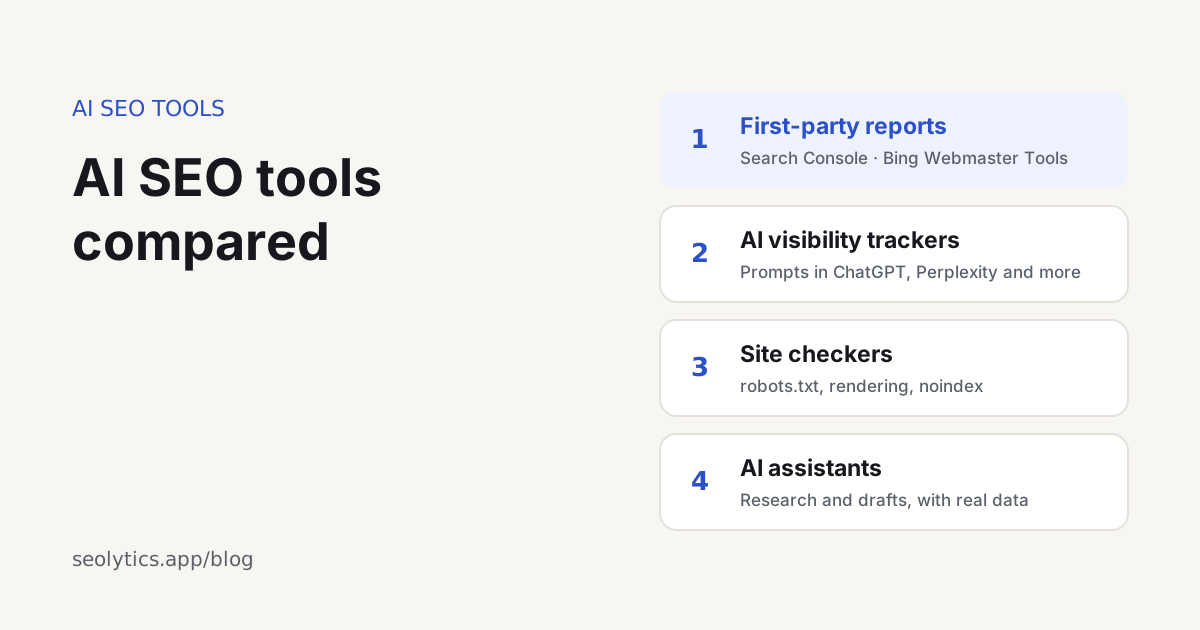
So let AI do the legwork, and have a person check every fact before it goes live. If you use Claude, ChatGPT or Cursor, an SEO MCP server lets the assistant pull keyword, ranking and audit data instead of guessing. We compare the main tools in AI SEO tools compared.
How to measure AI SEO
- Google Search Console has a Generative AI performance report, available to every site since the end of August 2026. It shows how often your pages appear in AI Overviews and AI Mode, by page, country and device. It reports impressions only, no clicks.
- Bing Webmaster Tools added an AI Performance report in February 2026. It shows how often Copilot and Bing's AI answers cite your pages, and the search queries behind those citations.
- For ChatGPT, Perplexity and Claude there is no report for site owners, so you track it yourself. Write down 20 to 50 questions your customers ask, run them on a schedule and note whether your brand comes up, which of your pages get cited and which sites get cited instead. The same question can get a different answer tomorrow, so look at the trend across many runs.
FAQ
Is AI SEO called GEO?
Usually, yes. GEO (generative engine optimization), LLMO and AI search optimization all refer to getting content cited in AI answers. Some people use "AI SEO" for doing SEO with AI tools instead, so check which meaning a vendor or a job ad has in mind.
Is SEO still worth it with AI?
Yes. AI answers are built from search results, so the pages that rank are the ones that can be cited, and Google itself describes optimizing for its AI features as SEO. The change is that an impression no longer guarantees a click, which makes being cited inside the answer as important as the ranking.
Which AI tool is best for SEO?
That depends on what you need. The free reports in Google Search Console and Bing Webmaster Tools cover AI impressions and citations. AI visibility trackers cover ChatGPT and Perplexity. Site checkers tell you whether AI crawlers can read your pages, and chat assistants speed up research and drafting. AI SEO tools compared looks at each kind.
Do I need llms.txt for AI SEO?
No. Google says Search doesn't use it, and none of the major AI search engines has confirmed reading it. It can help coding assistants and agents find their way around documentation, but crawler access, indexable HTML and clear answers matter far more.