 Seolytics
GEO vs SEO vs AEO: What's the Difference?
The difference between GEO and SEO: SEO ranks pages, GEO gets them cited by AI, AEO makes them the direct answer. Where they overlap and what to do first.
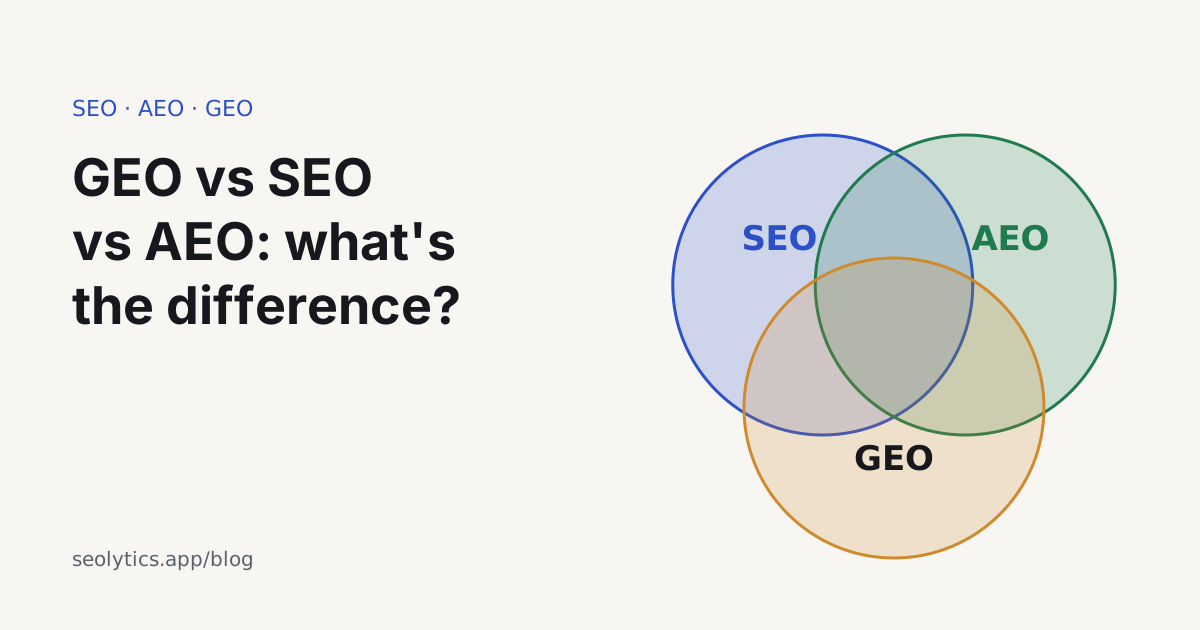
The difference between GEO and SEO is where you show up: SEO gets your pages ranked in search results, GEO gets them read and cited in answers written by AI. SEO (search engine optimization) is about the list of results in Google and Bing. GEO (generative engine optimization) is about AI assistants such as ChatGPT, Perplexity and Google's AI Mode. AEO (answer engine optimization) sits between the two and aims to make your content the direct answer, whether that's a featured snippet, a voice reply or an answer in a People Also Ask box. All three serve the same goal of being found when people search.
The terms are new and they overlap a lot. Below is how they differ and where to start.
GEO vs SEO vs AEO at a glance
| SEO | AEO | GEO | |
|---|---|---|---|
| Stands for | Search engine optimization | Answer engine optimization | Generative engine optimization |
| Where you show up | Blue links in Google and Bing | Featured snippets, People Also Ask, voice assistants | ChatGPT, Perplexity, Claude, Copilot, Google AI Overviews and AI Mode |
| What wins | The best page for a query | The clearest short answer | The most quotable, trustworthy passage |
| What you measure | Rankings, clicks, traffic | Snippets and boxes won | Mentions and citations in AI answers |
| Since | Late 1990s | Mid-2010s | 2023 |
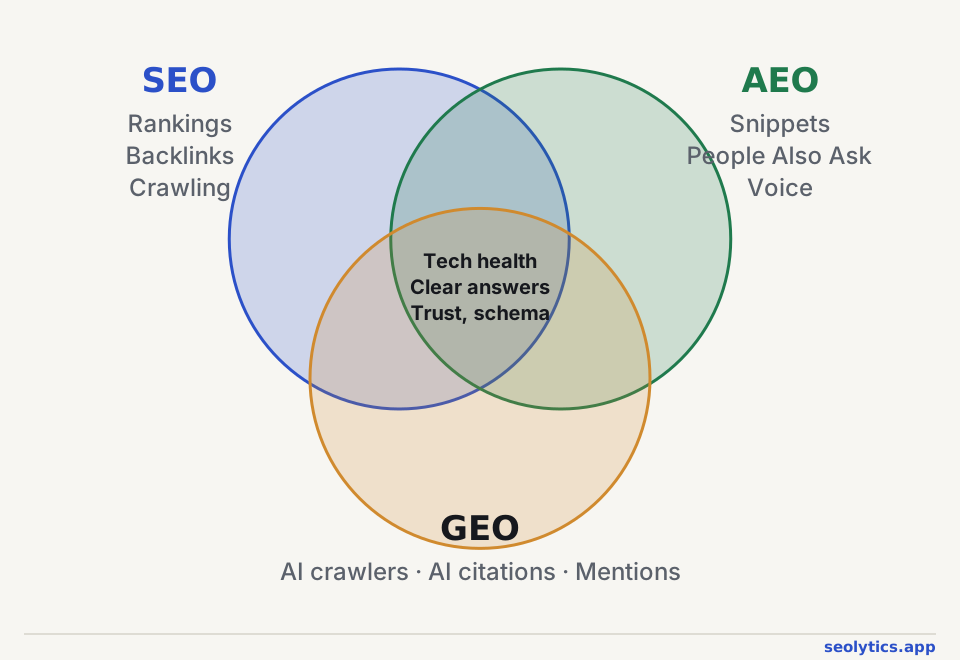
SEO: be in the results
Search engine optimization covers everything that helps a page rank: pages that can be crawled and indexed, fast templates that work on phones, content that matches what people search for, internal links, and backlinks from other sites.
It is still the foundation, because AI answers are built on search results. Google's AI Overviews and AI Mode use Google's index, Copilot uses Bing's, and ChatGPT search and Perplexity run web searches before answering. If a page doesn't rank for any of those searches, it rarely gets cited.
AEO: be the answer
Answer engine optimization started with featured snippets and voice search. When Google shows an answer box or Alexa reads out a reply, a single source gets used, and AEO is about being that source. The usual advice:
- answer the question in the first 40 to 60 words under a heading worded like the question;
- use lists for steps and tables for comparisons;
- add structured data where it accurately describes the page;
- cover the follow-up questions people tend to ask next.
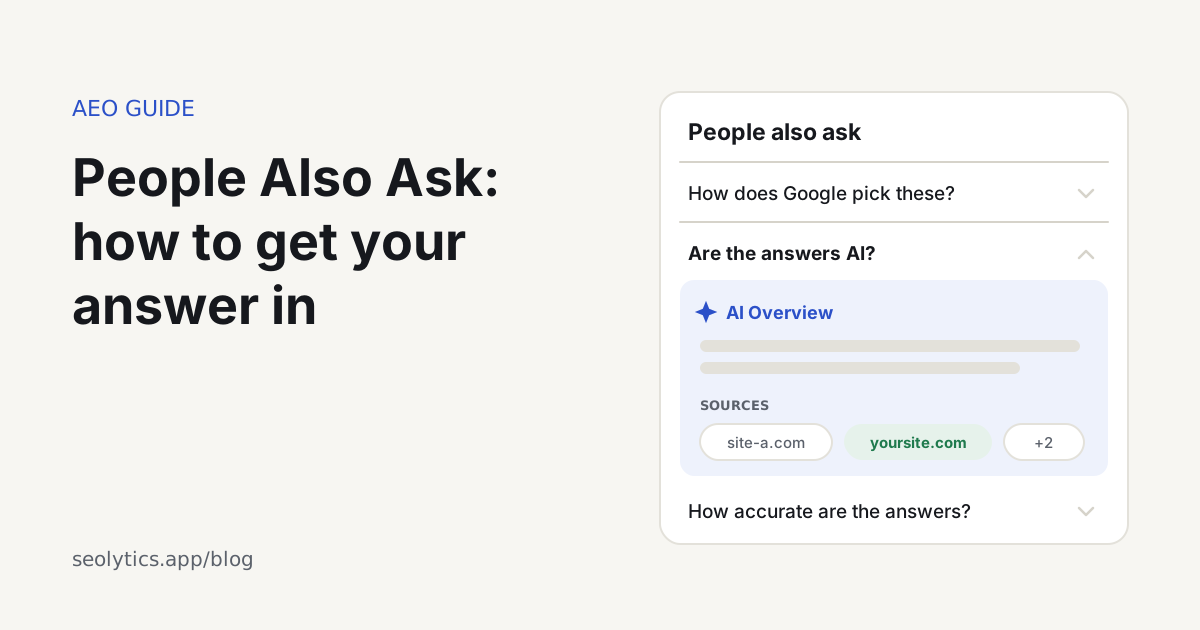
The same habits help with AI answers, which is why many people now treat AEO and GEO as one thing. It shows in Google's results too: by 2026 most answers in the People Also Ask box are AI Overviews, as we found in our own sample.
GEO: be cited by AI
Generative engine optimization keeps the AEO habits and adds a few things specific to language models.
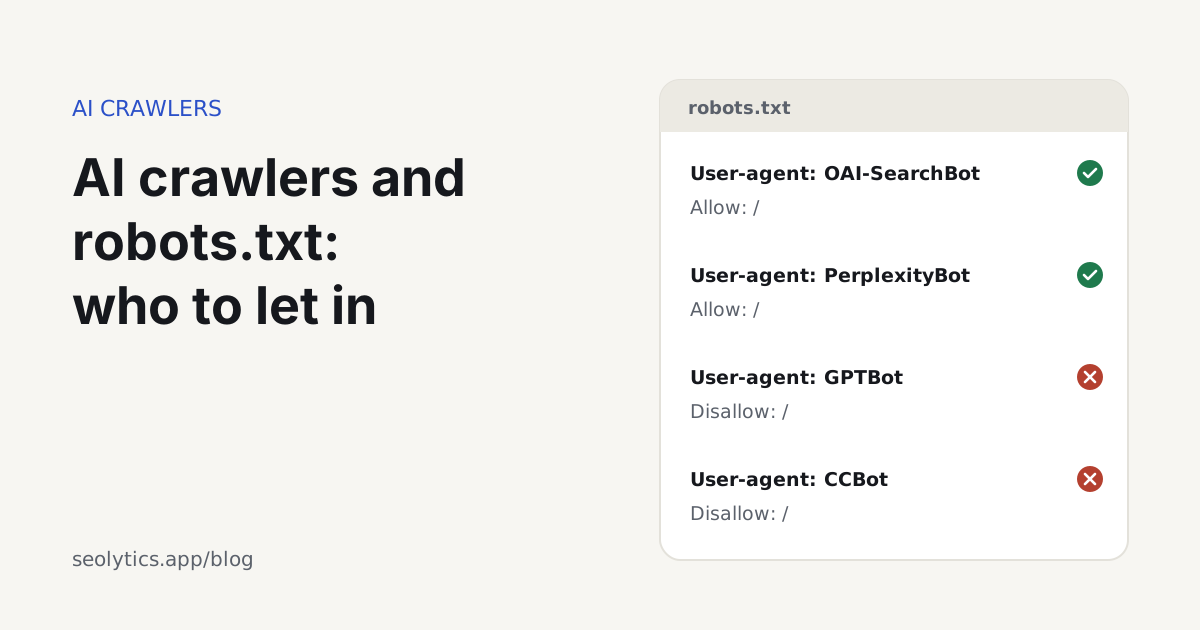
ChatGPT, Claude and Perplexity crawl with their own bots. If robots.txt blocks them, or the content only appears after JavaScript runs, those assistants can't use your pages. AI crawlers and robots.txt lists the bots and the rules.
Models quote paragraphs rather than whole pages, so each section should make sense when read on its own.
Sources, quotations and specific numbers make a passage more likely to be used. The original GEO study measured up to 40% more visibility from changes like these.
Assistants also name brands that come up in reviews, comparisons and discussions on other sites, so a good page alone isn't always enough.
Our practical guide to GEO goes through each of these in more detail.
What is the same in all three
All three depend on a technically healthy site: pages that load, return a 200 status, can be indexed and can be read without JavaScript. They all reward headings that match real questions and paragraphs that answer them straight away. They all favor pages that show who wrote them, when, and on what sources. And structured data helps each of them read the facts on a page correctly.
Fix these first, since the work counts in every channel at once.
What to do first
For a small business, the SEO basics plus answer-first content already cover most of AEO and GEO. After that:
- Run a technical audit for indexing problems, broken links, duplicate titles, missing schema and blocked AI crawlers. Our free website audit checks for both SEO and GEO problems.
- Allow the AI search crawlers in robots.txt (at least
OAI-SearchBot,PerplexityBotandClaude-SearchBot), even if you keep the training bots out. - Rewrite your 10 most important pages so each main heading is followed by a one-sentence answer, with the detail after it.
- Choose 20 to 50 prompts and track them every month, with your Google rankings and your mentions in AI answers side by side.
FAQ
Is GEO going to replace SEO?
No. AI assistants find pages through search before they answer. ChatGPT search and Perplexity run web searches, Google's AI Overviews and AI Mode use Google's index, and Copilot uses Bing's. GEO is a layer on top of SEO, and a page that doesn't rank for those searches is rarely cited.
Will AEO replace SEO?
No. AEO is the part of SEO that targets answer formats such as featured snippets, People Also Ask and voice replies. The answer still comes from a page that is indexed and ranks, so the SEO basics remain the foundation.
Is AI SEO called GEO?
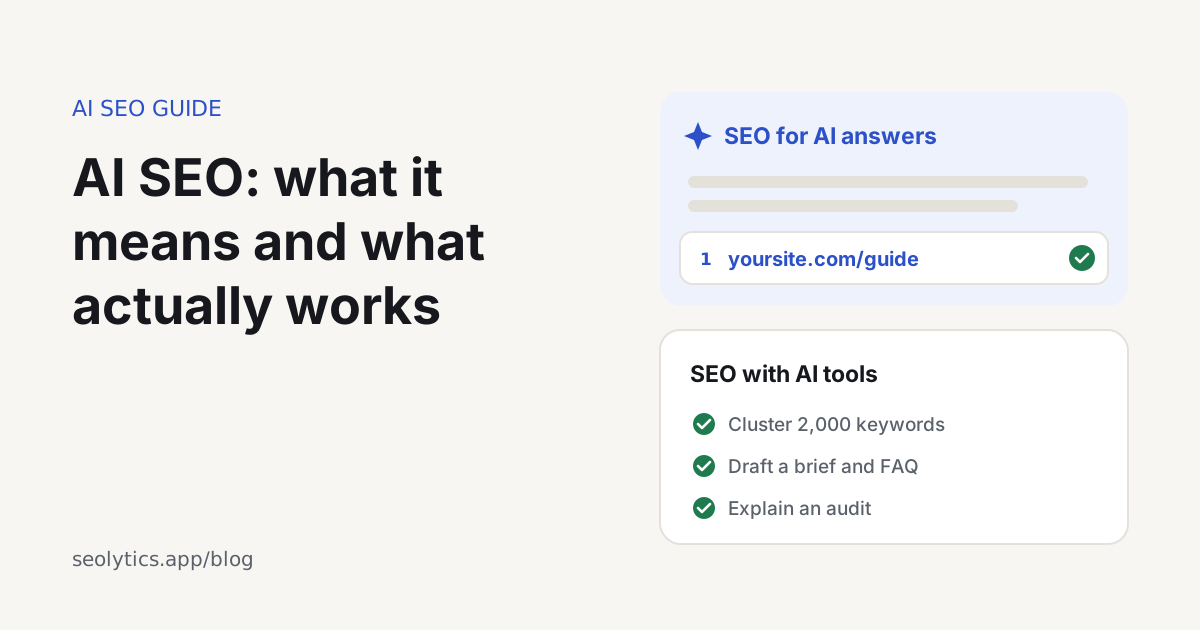
Often, yes. GEO, AI SEO, LLMO (large language model optimization) and AI search optimization are names for roughly the same work: getting content into answers written by AI. Some people use "AI SEO" for doing SEO with AI tools, so check which meaning is intended. We cover both in AI SEO explained.
Is AEO the same as GEO?
They overlap, but they aren't the same. AEO targets a single direct answer, like a featured snippet or a voice reply. GEO targets AI-generated answers that combine and cite several sources. Most of the tactics, such as clear answers, good structure and schema, help with both.
Is SEO still worth it in 2026?
Yes. AI answers are built on search results, so ranking still decides which pages can be cited, and the results themselves still send visitors. The difference is that a click is no longer guaranteed, so being cited in an AI answer matters as much as the ranking.