 Seolytics
What Is Generative Engine Optimization (GEO)? A Practical Guide
GEO is how you get your pages read, trusted and cited by ChatGPT, Perplexity and Google's AI answers. What it is, how it differs from SEO and where to start.
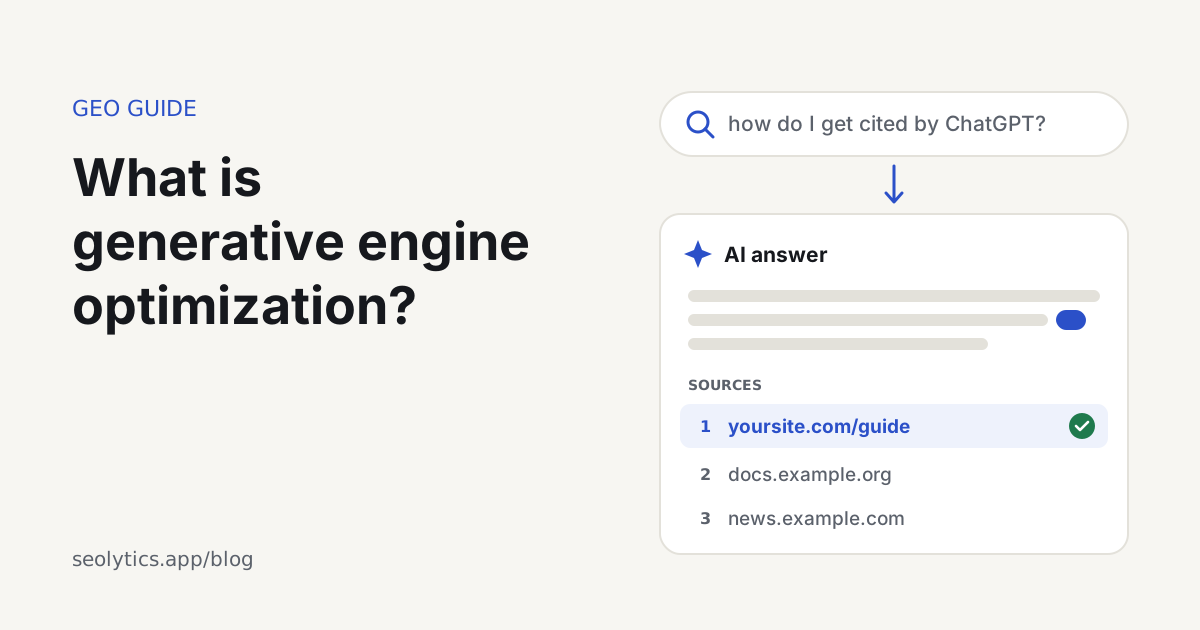
Generative engine optimization (GEO) is the practice of making your pages easy for AI assistants to find, understand and cite. When someone asks ChatGPT, Perplexity, Claude or Google's AI Mode a question, the assistant searches the web, reads a handful of pages and writes an answer with links to its sources. GEO is about being one of those sources.
The term comes from a 2023 research paper, GEO: Generative Engine Optimization (Aggarwal et al., KDD 2024). The authors tested how small edits to a page change its visibility in AI-generated answers. Adding sources, quotations and statistics raised visibility by up to 40% on their benchmark.
You don't need to read the paper to do GEO well. Most of it is ordinary good SEO, with extra attention to two questions: can an AI system read this page, and does it contain something an AI would want to quote?
How an AI answer picks its sources
Each AI search product works a little differently, but the steps are broadly the same:
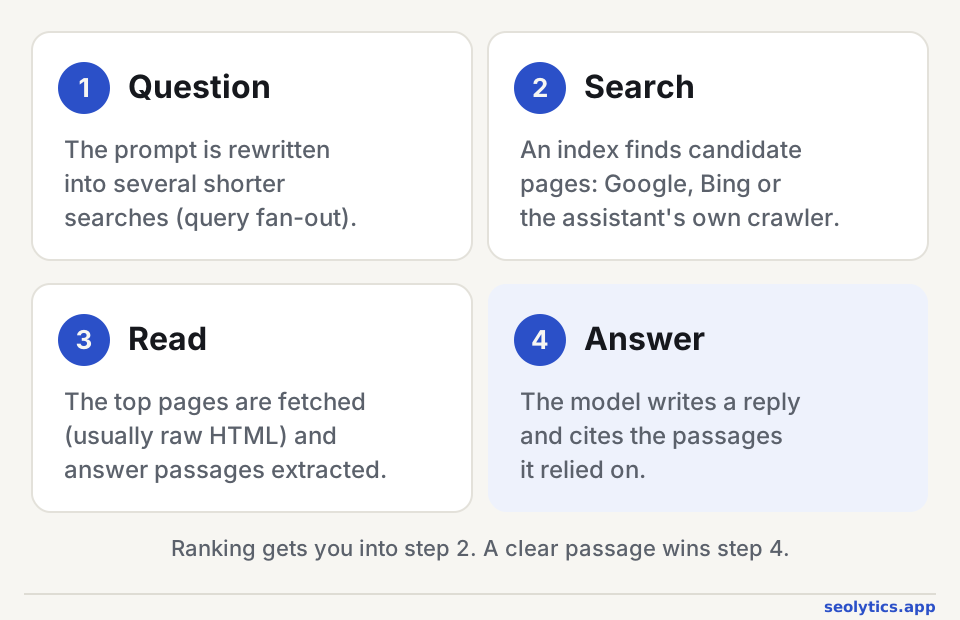
- The question is rewritten into searches. An assistant rarely searches for the exact prompt; it splits it into several shorter queries, which is often called query fan-out.
- Search finds candidate pages. ChatGPT search relies on its own crawler (OAI-SearchBot) and partners, Google's AI Overviews and AI Mode use Google's index, Copilot uses Bing, and Perplexity runs its own index.
- The system reads the best candidates. It fetches the pages, usually as raw HTML, and pulls out the passages that answer the question.
- The model writes an answer and cites the passages it used. Pages that offered a clear, self-contained and trustworthy passage get the link.
So you still have to rank, because a page that never appears in those searches can't be cited. But ranking alone isn't enough either. Among the pages it found, the model picks the ones whose passages answer the question most directly and credibly.
GEO vs SEO
| SEO | GEO | |
|---|---|---|
| Goal | Rank in the list of results and earn the click | Be quoted or cited inside the AI answer |
| Unit that competes | The page | The passage: a paragraph, a list, a table row |
| Who reads first | Googlebot, then a person | A crawler, then a language model, then maybe a person |
| Success metric | Positions, clicks, traffic | Mentions, citations, share of answers |
| Main levers | Relevance, links, technical health | Access for AI crawlers, clear answers, evidence, brand mentions |
GEO doesn't replace SEO. It builds on it: the technical basics and the authority that help a page rank also make it a candidate for AI answers. For a wider comparison that includes answer engine optimization, see GEO vs SEO vs AEO.
The four layers of GEO
1. Access: can AI systems read the page?
Many sites get this layer wrong without realizing it.
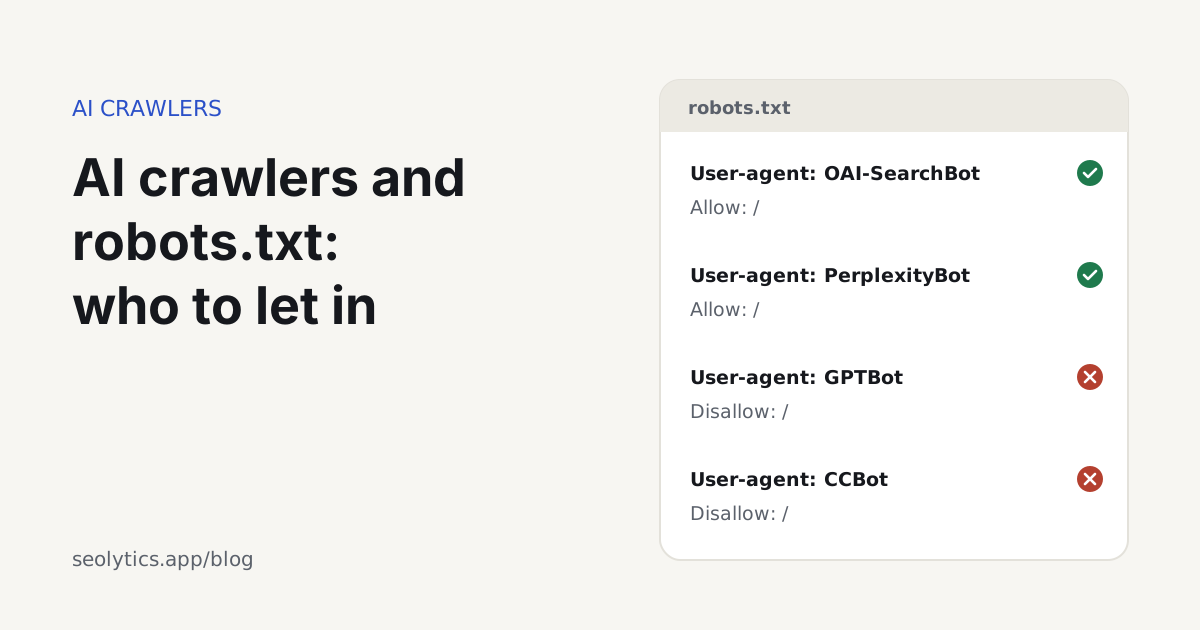
AI companies use separate crawlers for training and for search. Blocking GPTBot keeps your content out of OpenAI's training data, while blocking OAI-SearchBot keeps you out of ChatGPT search answers. Plenty of sites block both by accident, through a blanket rule or a CDN setting. Our guide to AI crawlers and robots.txt lists the user agents and what each one does.
Most AI crawlers read the HTML your server returns and don't run JavaScript. If your content only appears after scripts run, they see an empty page.
nosnippet, max-snippet and data-nosnippet limit what Google can quote, and that includes AI Overviews and AI Mode.
Slow responses, soft 404s and redirect chains hurt you with every crawler, not only Google's.
2. Understanding: is the answer easy to extract?
Language models lift passages out of pages, so write passages that make sense on their own.
- Start with a direct answer: one or two sentences that answer the question in the heading, before any nuance.
- Word headings the way people ask the question, and answer each one in the first paragraph under it.
- Use lists, steps and tables for comparisons, specifications and processes.
- Add structured data (Article, Product, FAQPage, Organization) so the facts on the page can't be misread.
- Keep to one topic per page. A page that answers ten loosely related questions usually loses to ten pages that each answer one question well.
3. Trust: is the page worth citing?
AI answers prefer pages that look like reliable evidence. Name the author and show why they know the subject. Show when the page was published and last updated, and keep it current. Link to your sources; in the GEO paper, adding citations and quotations was among the most effective changes. Give specific numbers, such as your own data, benchmarks or prices, instead of vague claims.
4. Presence: does the web talk about you?
Assistants form their picture of a brand from many pages besides yours. Reviews, comparisons, forum threads, directories and press coverage all influence which brands an answer names. For GEO this plays the role link building plays in SEO: try to get mentioned on the pages AI answers already cite for your topic.
How to measure GEO
Google's AI features now have a report in Search Console, but ChatGPT and Perplexity offer nothing similar, so most of the measuring happens from the outside:
- Write down 20 to 50 prompts your customers would ask, such as "best X for Y", "how to do Z" or "X vs Y".
- Run them in ChatGPT, Perplexity and Google's AI Mode, and note whether your brand is mentioned, whether your site is cited, and which sites are cited instead.
- For Google, open the Generative AI performance report in Search Console to see which of your pages appear in AI Overviews and AI Mode.
- Repeat every month. AI answers vary between runs, so look at how often you appear over time rather than at one response.
Seolytics automates steps 2 and 4. Its AI visibility check runs your prompts in ChatGPT and Google's AI answers and shows mentions, cited pages and the competitors cited instead.
How to optimize for generative AI: a GEO checklist
- robots.txt allows
OAI-SearchBot,PerplexityBot,Claude-SearchBotandGooglebot - Main content is in the HTML without JavaScript
- No accidental
nosnippetornoindex - Each important page opens with a direct answer to its main question
- Headings are phrased the way people ask
- Article, Organization and FAQPage schema where they fit
- Author and dates on every article
- Sources linked, numbers specific
- A short list of prompts you check every month
The free website audit checks the first five items on up to 25 pages at once.
FAQ
Does GEO replace SEO?
No. AI search products retrieve pages from a search index before writing an answer, so a page that doesn't rank is rarely cited. GEO adds a layer on top of SEO.
How long does GEO take to work?
Access fixes, such as unblocking AI search crawlers, can show results within days or weeks, once the pages are crawled again. Content work and brand mentions take months, as in SEO.
Do I need an llms.txt file for GEO?
No, it's optional. llms.txt is a proposed file that gives AI tools a map of your site. Google says Search doesn't use it, and the main AI search engines haven't said they read it. It takes little time to add, but robots.txt access and clear content matter far more. Our article on llms.txt explains when it helps.
Which generative engine optimization tool is the best?
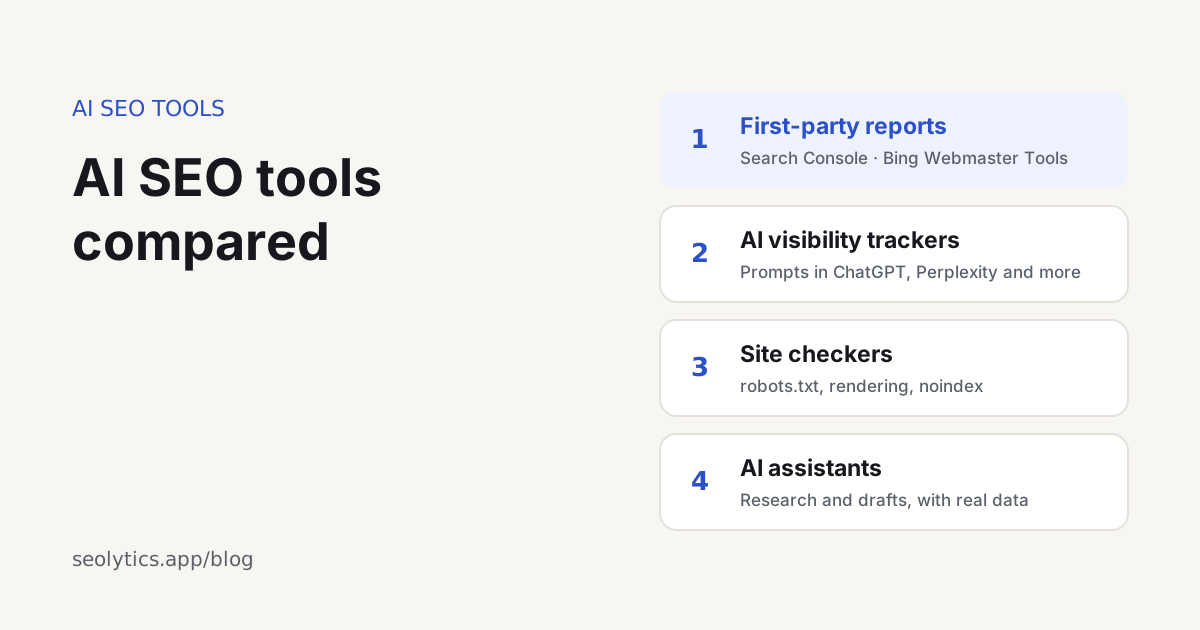
No single tool does it all, because GEO tools do two different jobs. AI visibility trackers run your prompts in ChatGPT, Perplexity and Google's AI answers and record mentions and citations. Site checkers test AI crawler access, rendering and structure. Choose a tracker that shows the actual answers and the pages they cite for the assistants your customers use.
What is the difference between GEO and AEO?
AEO (answer engine optimization) is an older term for optimizing content to be the direct answer in featured snippets, voice assistants and People Also Ask. GEO is about generative AI answers that combine several sources. In practice the tactics overlap.